Family Origins
This post requires a fair bit of context to understand, as it deals with an unassuming piece of property in a relatively minor city in upstate New York. Since this blog relates to everything and anything about the “Masseth” family, let’s start there.
In June of 1832, my 3x great-grandfather Francis Xavier Masseth (who I’ll refer to as Xavier) migrated to the U.S. from France, along with his wife Mary Ann, and their two children, Michael and Catherine. They initially settled in Utica, NY, living with Xavier’s older brother Joseph, who had moved there several years earlier.
Some time the following year, the family moved to Rochester, NY. Their initial living situation is unknown, but they likely rented for a few years while Xavier built up enough capital to give his family a sense of stability. By the end of 1837, Xavier must have been doing very well for himself, as he bought six lots of land on the west side of the river, joining a thriving German-speaking community. These lots in the Perkins & Schemerhorn tract are what we will discuss here.
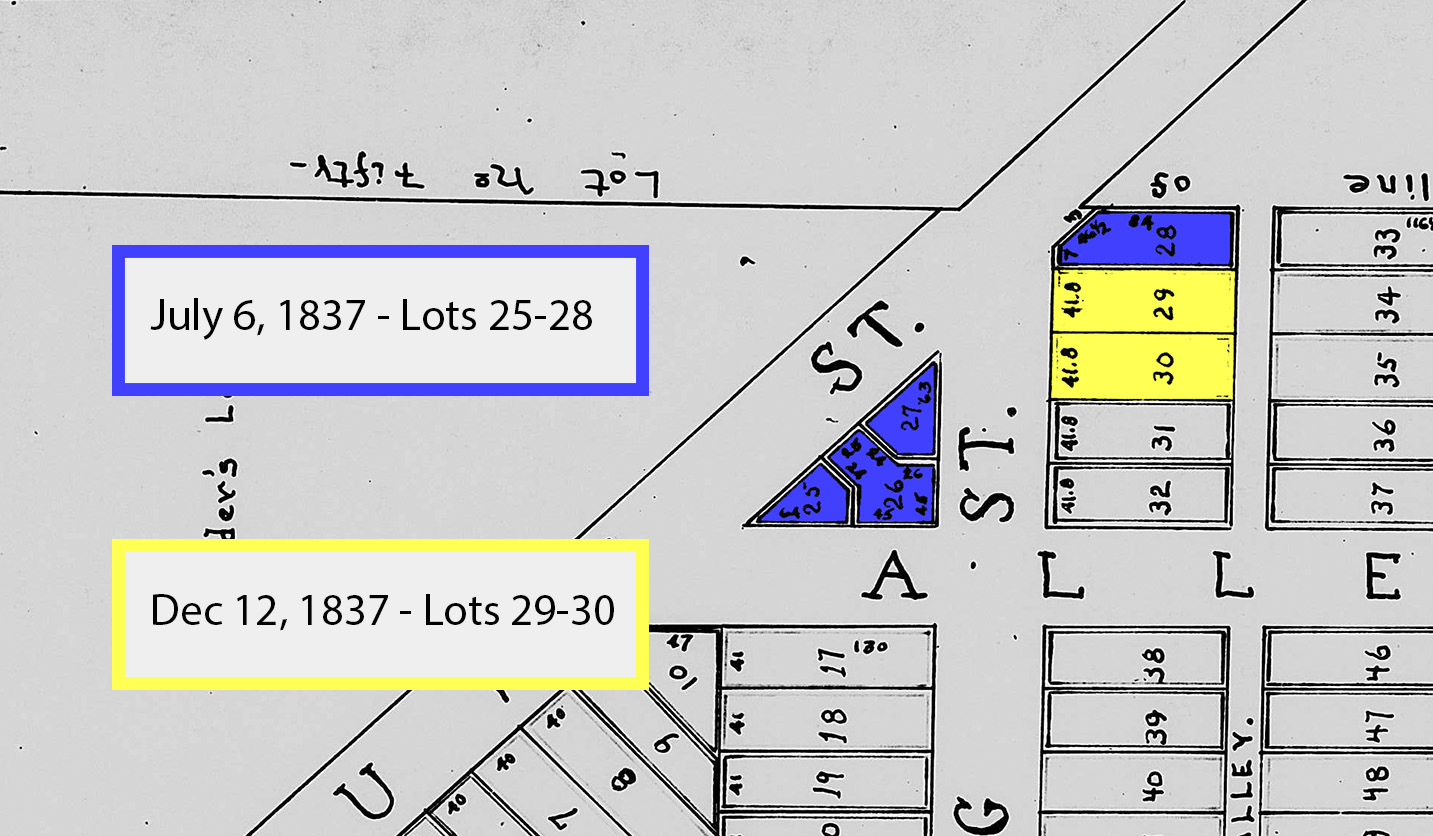
Lots numbers 29 and 30 are especially interesting because the deed that transferred ownership to Xavier included mention of a covenant between Charles Perkins (whose name the tract bears) and Xavier made on May 21, 1834, promising to hand over the property “on certain payments and conditions.“[2] This date represents the earliest known record of the family being in Rochester.
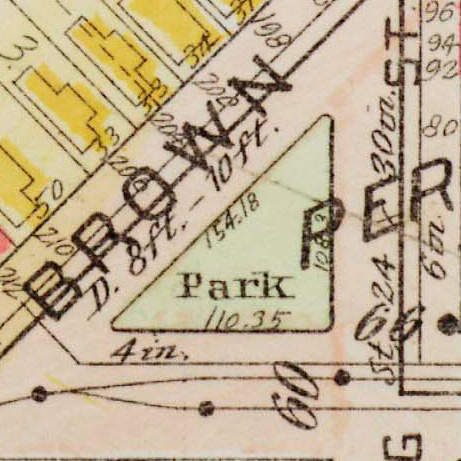
Xavier built a house and nailsmith shop on lots 25-27, the triangular piece of property bounded by Allen, King, and Brown Streets. This became the Masseth family’s first true home in Rochester. We know from his youngest son Edward Adam Masseth that “The house was built by my father. He made by hand every nail that was put into the house… He also had a blacksmith shop on this site. The bellows in the shop were operated by a dog-powered treadmill.“[3]
The First Decade
Throughout the following years, Xavier and his family found stability. In 1842, Xavier and many from his community founded a church named Ss. Peter and Paul, located just one block away from his home. He and Mary Ann also expanded their family, having a total of eight children by 1845.
In the late 1840s, Xavier shifted his career from nail making to piloting lumber boats on the Genesee Valley Canal. This change was likely driven by economic shifts, such as industrialization, which may have rendered his hand-made nails less profitable. The boating business presumably supported the burgeoning local brewery industry by supplying lumber to nearby coopers. Tragically, Xavier passed away in September of 1849 from an illness he contracted while working on the canal. Having died intestate, the property presumably passed to Mary Ann. His eldest son, Michael, subsequently took over the boating business for several years.
Family Changes
Xavier’s death would cause a chain reaction that would shake up the family. Michael left for California a few years after his father’s death to pursue fortune in the Gold Rush. His younger brother Ignatius followed him in 1859. Several of Mary Ann’s other children would also leave for the Oil Rush that took place in western PA during the mid-1860s. In 1867, her son Ignatius died while mining in the Gold Rush. In 1869, her only daughter Mary Ann married and moved to Irondequoit, leaving only her sons Frank and George remaining in Rochester. This must have been too much for Mary Ann, as around this time she moved to Canandaigua to be with her sons Edward and Joseph, who were running a hotel.
With Mary Ann in Canandaigua, and Frank and George living elsewhere in Rochester, this left the Brown Street house abandoned. If we check the city directories to see what became of the house during this period of absence, we get interesting results. The property is consistently addressed as “77 Brown” throughout the decades since it was initially purchased. Checking this address, we see an “Andrew Erhart,” a railroad engineer, who boarded at this address from as early as 1863 to at least 1871. This may have been the Masseth family repurposing Xavier’s blacksmith shop as housing, or perhaps the primary building had enough space to house a few boarders.
At any rate, the property did not have any Masseths living at it after 1869. Mary Ann remained in Canandaigua for most of the 1870s. Her son Edward married in 1877. After his first child was born, he, his new family, and Mary Ann returned to Rochester, leaving the Canandaigua hotel to his brother Joseph. In Rochester, Edward took over proprietorship of the Plymouth Hotel, located at the junction of Plymouth Ave and Adams St, from Philip McConnel.
Abandonment
Due to no longer living at the residence, it appears the Masseth family simply abandoned the property. When that happens, the City inevitably gets involved. This is exactly what happened when, on May 20th, 1878, the City of Rochester claimed 77 Brown Street due to unpaid taxes. The City attempted to sell the property at public auction, but there were no bids, so the City took ownership of the property.
Tragically, Mary Ann passed away on August 17th, 1881. She would make a daily walk from the Plymouth Hotel to the Masseth Tract, a walk of about two miles, to gather harvest vegetables that she was growing there. Family lore tells us that she was either walking to or from the Masseth tract and fell down while crossing the Jay Street Bridge, breaking her hip. Due to her age, this was not a minor injury, and it resulted in her death some time later.
This appears to have complicated things. Mary Ann left a will that specified that all property be “equally devided among all of my children"[4], thus ownership of the Brown Street property would have fallen in equal shares to all children, had it still belonged to Mary. The Lis Pendens index of Monroe County shows a lawsuit was brought forth on May 9th, 1882, between the City of Rochester and every one of the Masseth children, which may explain the children’s attempt to keep the property in the family. Unfortunately, the case document itself is not readily available online, so we can’t know the whole story until we have it.
Regardless, the lawsuit appears to have been a long, protracted affair, as the case was only settled by March 4th, 1889. What settled this case?
Under New Ownership
If we check the deed index for property transfers from the City of Rochester to a Masseth around the time of the lawsuit settlement, we get only one result: Mary Julia Masseth. This unfamiliar name is Xavier and Mary Ann’s granddaughter, their first-born Michael’s sole surviving child. Despite her having lived in Rochester from as early as 1865, evidence of her relationship to the rest of the Masseth family is nonexistent, to the point that modern Masseth researchers of today weren’t even sure of her identity until relatively recently, despite appearing frequently in records from the 1870s onward.
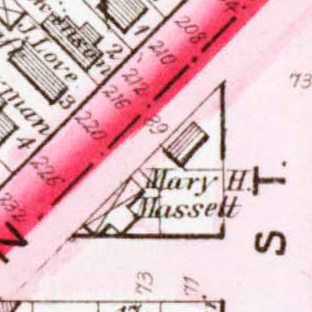
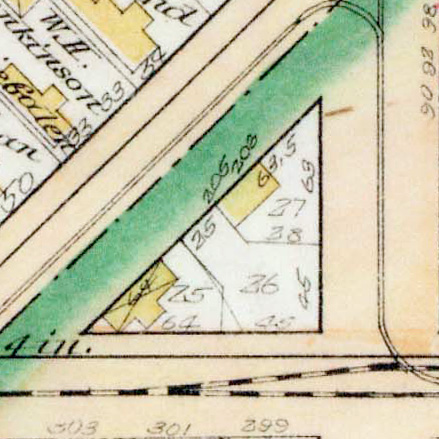
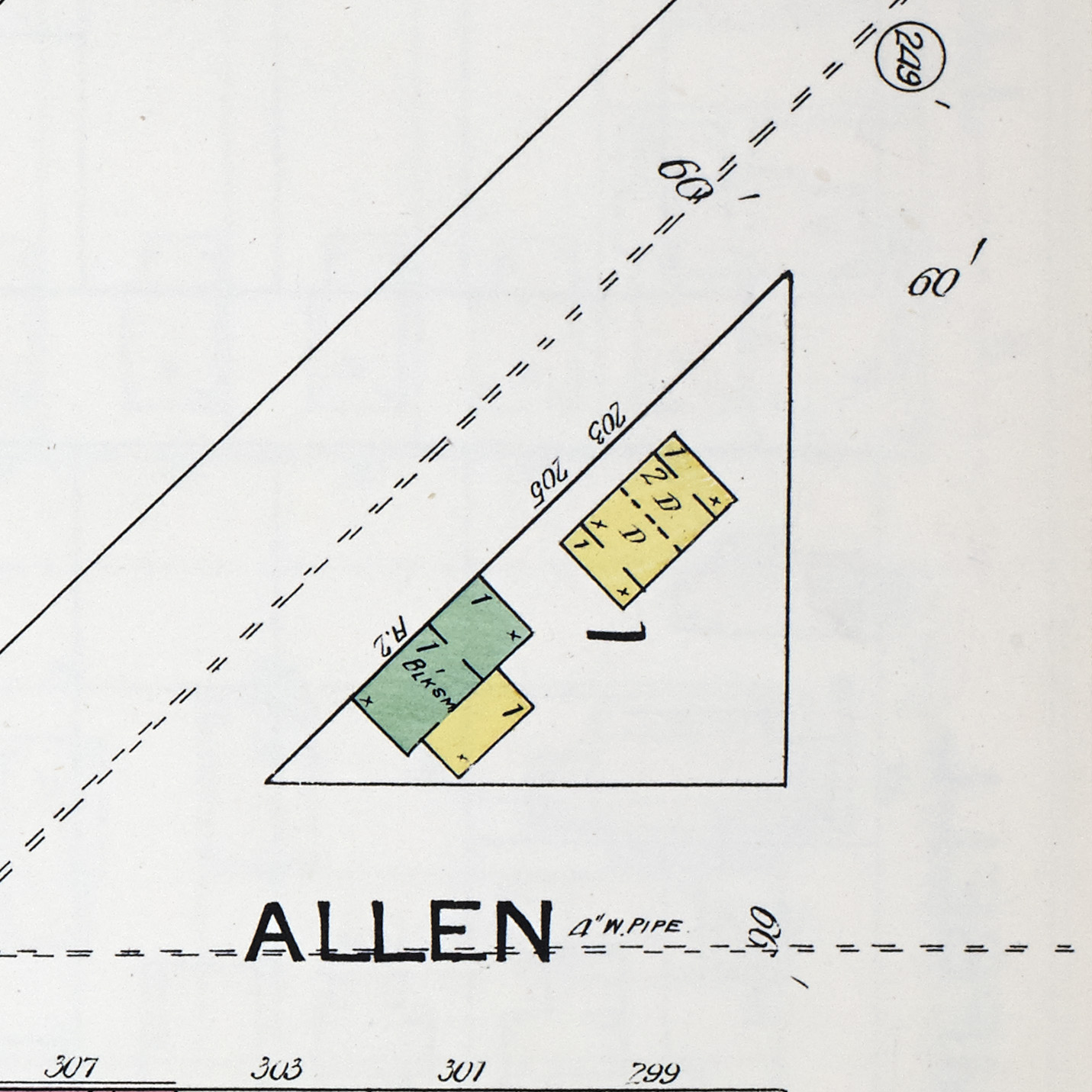
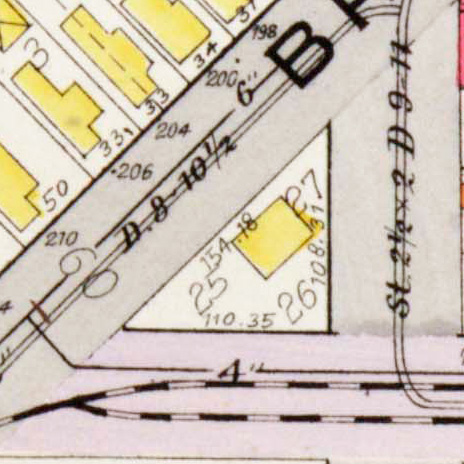
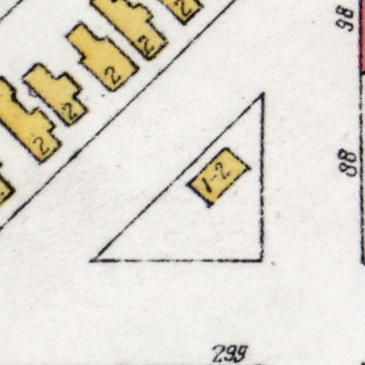
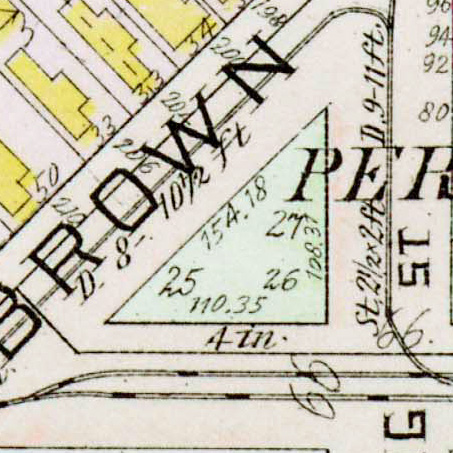
Mary, through a mortgage executed by the Rochester Savings Bank, purchased the Brown Street property back from the City on March 13th, 1889, for an unspecified sum, though it was likely the original assessed value in addition to interest and fees. It is unknown what exactly she did with the property, but maps from the era show a change that occurred between 1892 and 1900. From when the property was first built upon after 1837 all the way until Mary’s purchase of the property in 1889, there had been just two buildings on the property: a house and a blacksmith shop. Maps from 1875[5], 1888[6], and 1892[7] confirm this. However, a map from 1900[8] shows only a single building. We can assume this happened after 1895, as at that time the property would change hands again.
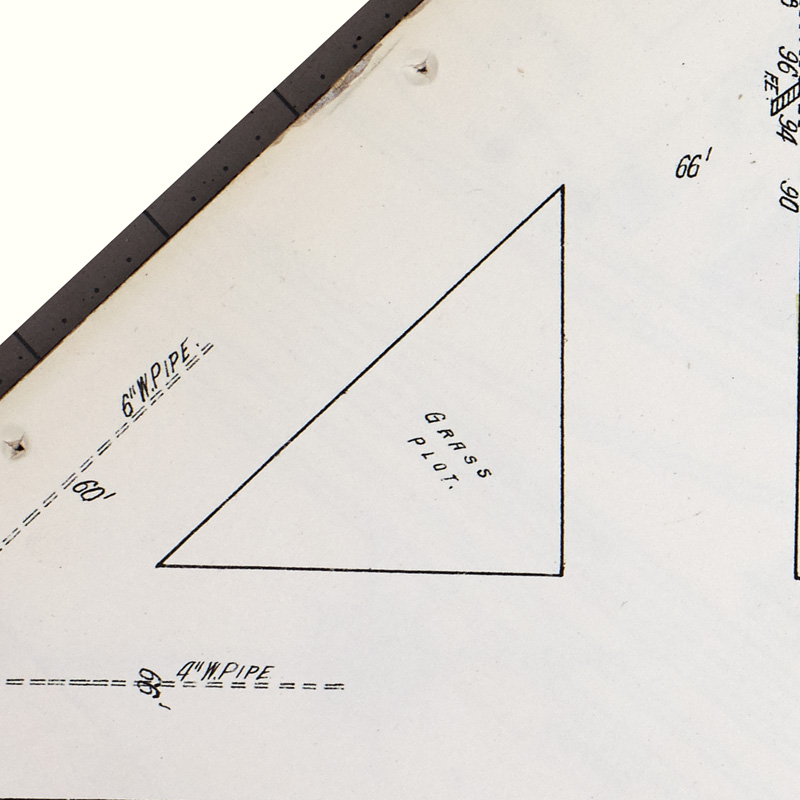
In 1895, Mary went into delinquency on the mortgage, and the City of Rochester put the property up for auction again. This time, the Rochester Savings Bank bid $2000 on the property and took ownership of it. This appears to be the end of the story of the Masseths at the Brown Street property, as by 1900 the blacksmith shop was torn down, and by 1910 no buildings remained on the property.[9]
The Property Over the Years
Below is s slideshow that shows all official maps containing the property that I was able to find. We can see the slow change over the decades.
Legacy
Today, the land still exists as a small park. It has not been built upon since the Masseth family’s time, though the surrounding area has changed significantly. The once-thriving Erie Canal, after experiencing a decline in traffic with the advent of railroads and highways, saw portions repurposed for the Rochester Subway in the 1920s. Eventually, much of the old canal bed, including the subway, was replaced by modern infrastructure like Interstate 490.
Interestingly, there is one remnant from that era. Just across the street from the property, at 90 King St, stands a house that public records state was built in 1844. This house dates back to the early days of the Masseth family’s presence in Rochester. Based on its location, it appears to be lot 30, which Xavier sold to Henry Deaner in 1839. Looking at this house allows us to imagine what Xavier’s house might have looked like. Who knows, perhaps this house was even built using some of Xavier’s handmade nails.
Xavier’s nails indeed would be the holy grail of Masseth heirlooms. His son Edward mentioned that several of his father’s handmade nails were sent to the “municipal museum” after the city tore down the house.[2] Present-day efforts to locate these nails at the museum have been unsuccessful. However, I often wonder if a metal detector might reveal some hidden treasures still buried on the property.
Citations
- Monroe County Deeds - Liber 11 Page 562 (1827)
- July 6, 1837 Xavier Masseth Deed - Monroe County Deeds Liber 42 Page 26 (1875)
- Edward Masseth's Centennial Pioneer Committee Application (1934)
- Mary Ann Franck's Will (1875)
- 1875 Rochester Plat Map (1875)
- 1888 Rochester Plat Map (1888)
- 1892 Sanborn Fire Insurance Map (1875)
- 1900 Rochester Plat Map (1875)
- 1910 Rochester Plat Map (1875)